TIMBER FRAME INSTALLATION
Date: March 2026
Location: Architectural Association School of Architecture
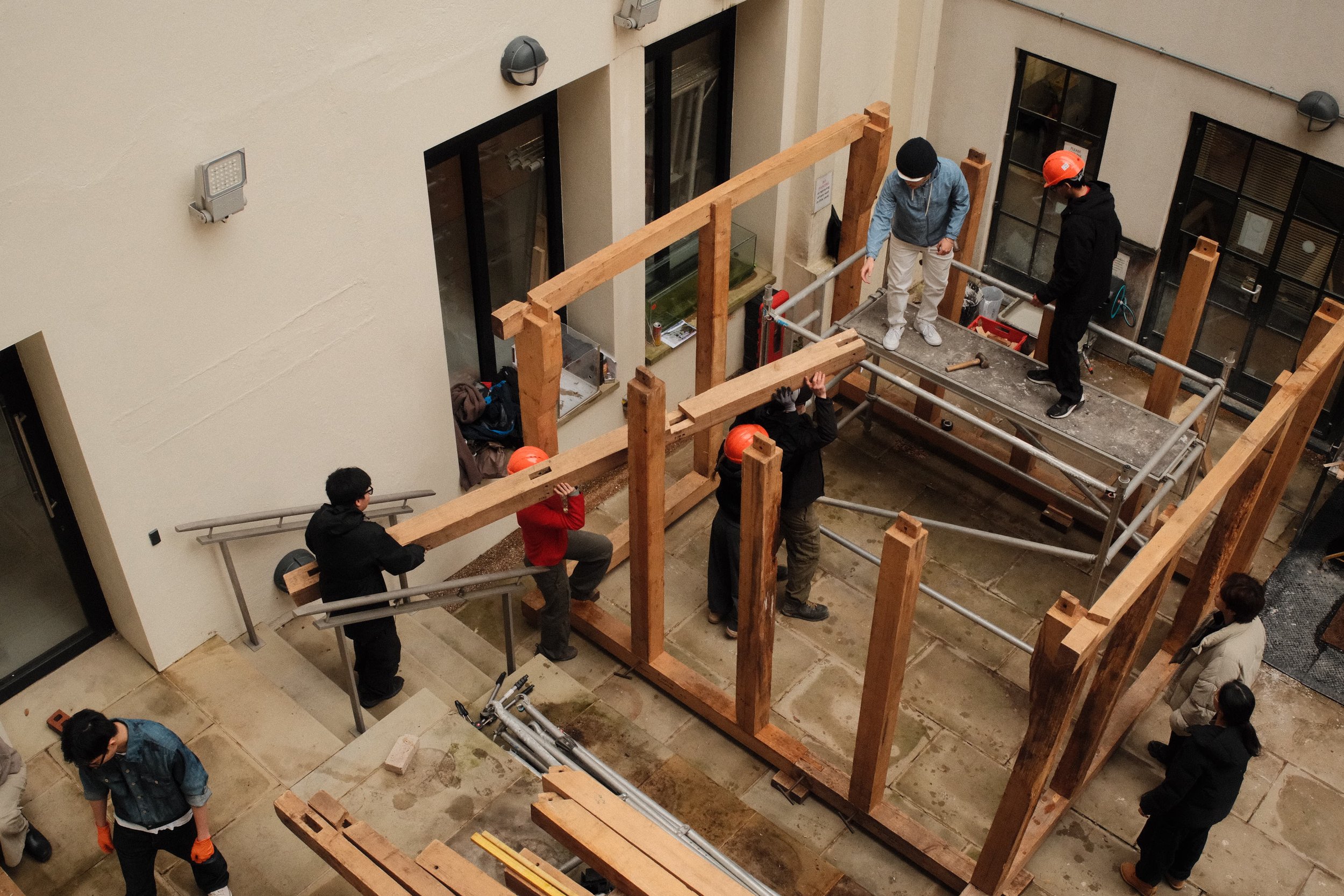
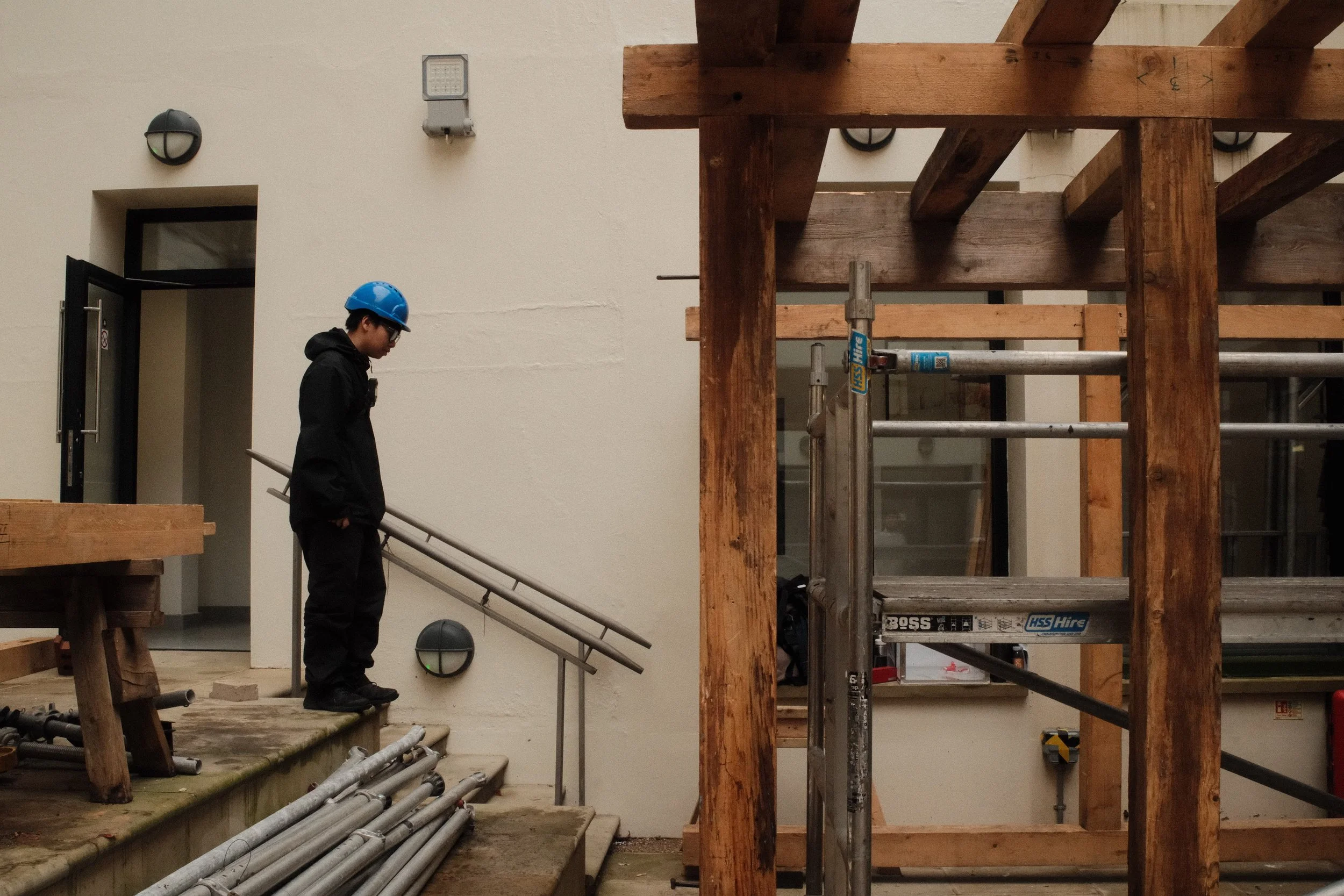
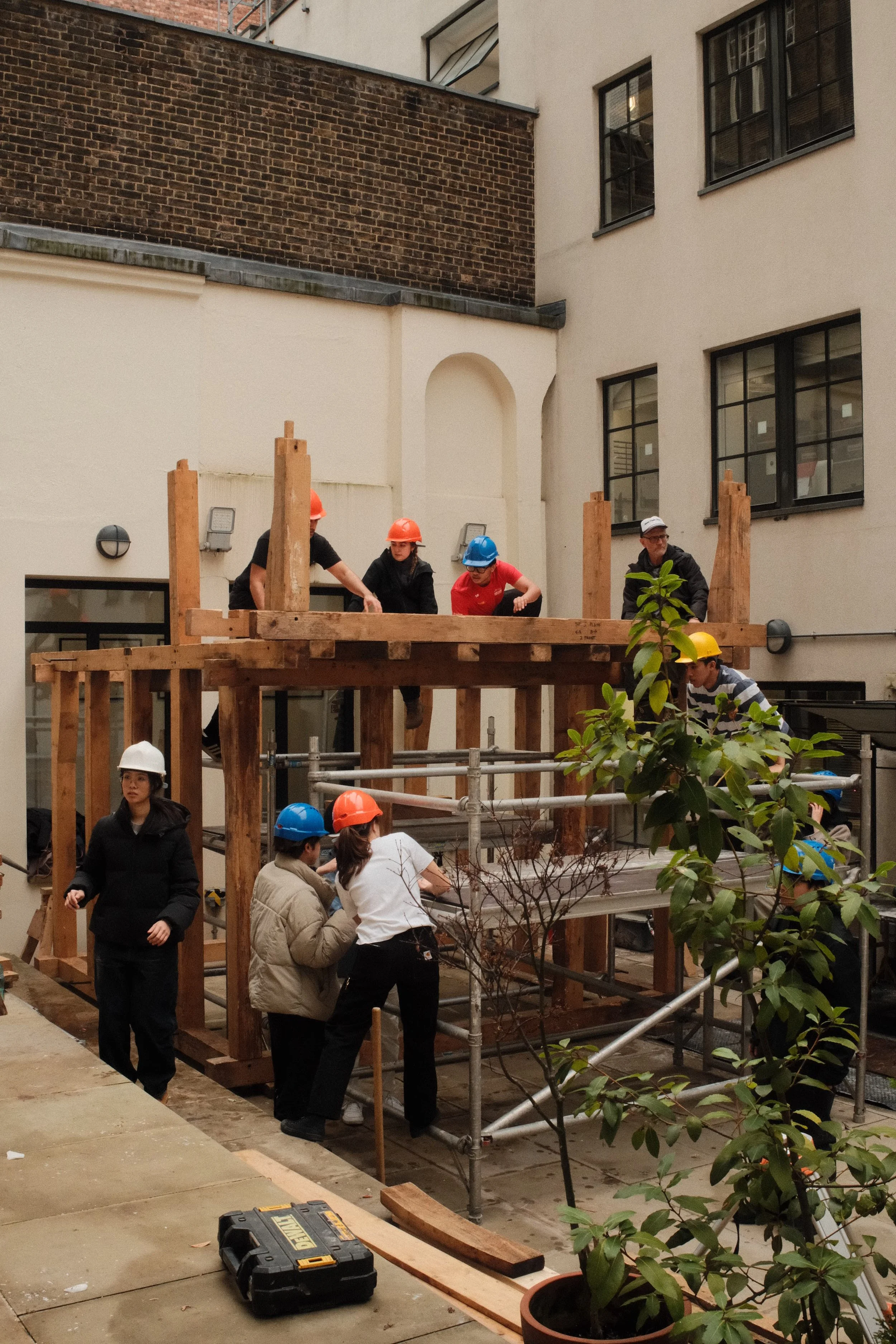
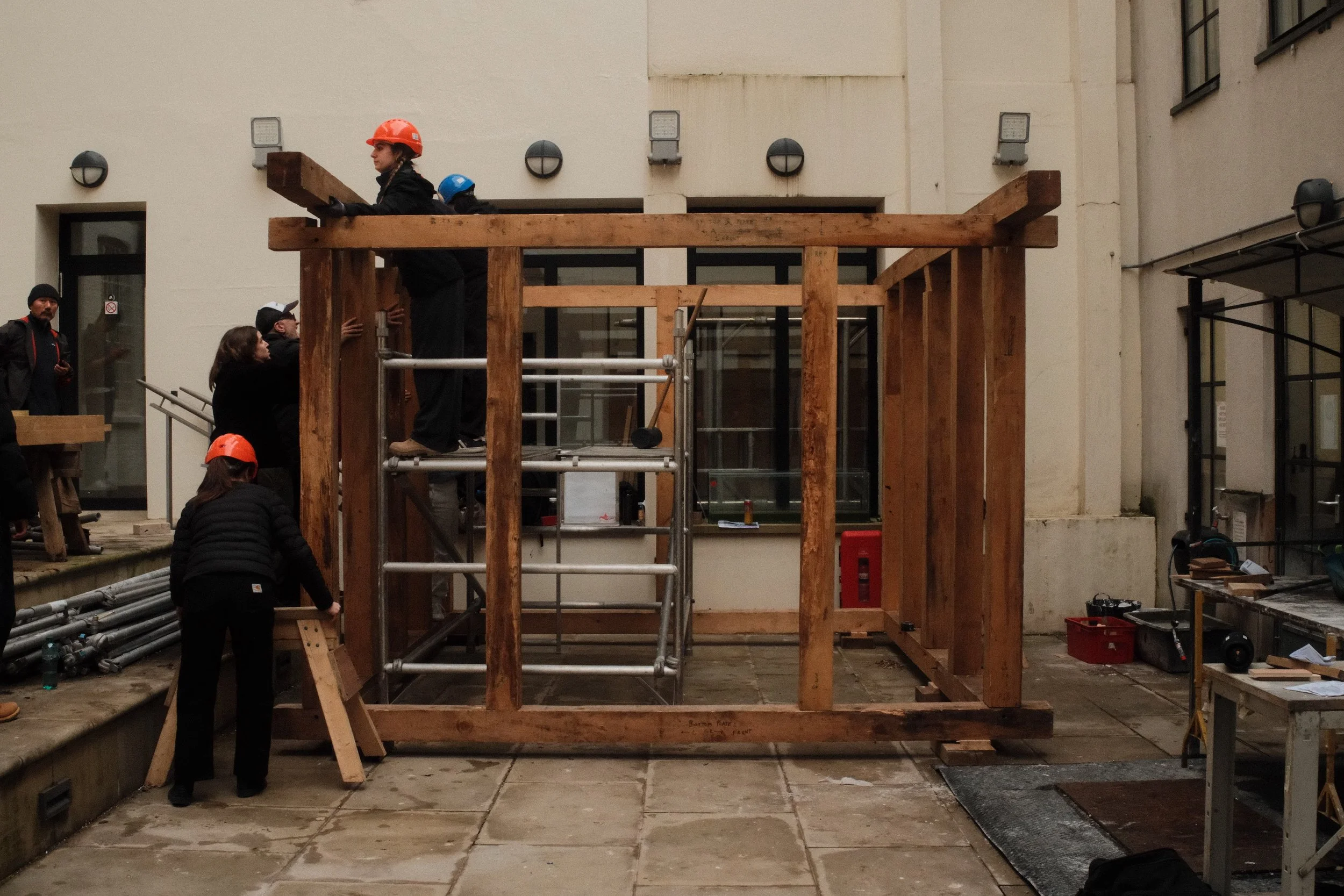
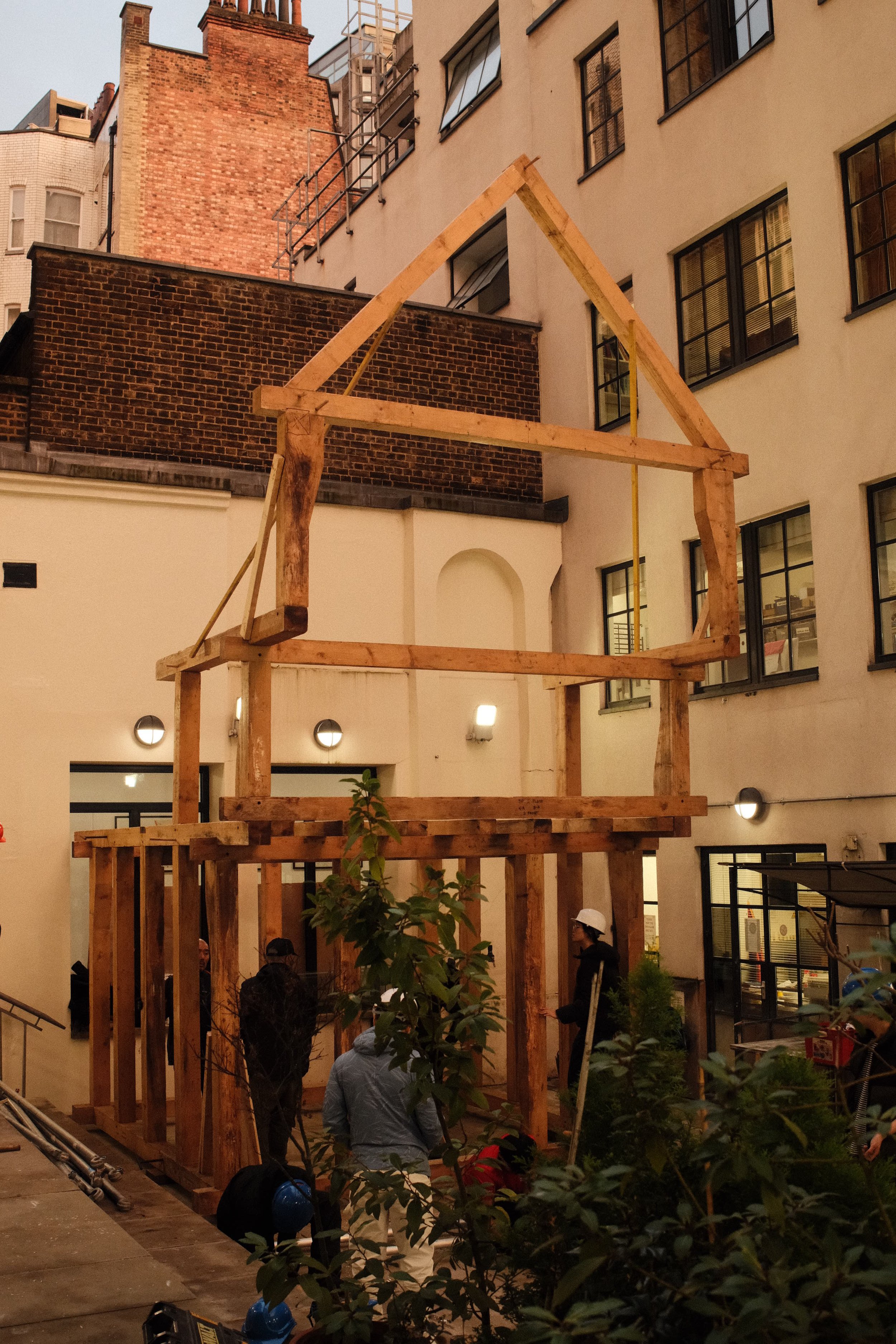
This installation explores the structural logic of the traditional English timber-framed house, a construction method widely used across Britain from the medieval period through the 16th century. Rather than reproducing a complete building, the project reveals the underlying structural skeleton that historically supported these houses. By isolating and assembling the frame itself, the work exposes the spatial and structural system that shaped early domestic architecture. The structure reproduces the primary frame of a two-storey house typical of the 15th century. These buildings were constructed from heavy oak timbers arranged in a post-and-beam system. Vertical posts, horizontal beams, and diagonal braces form a rigid structural framework capable of supporting upper floors and steeply pitched roofs. In historical buildings, the spaces between the timbers would typically be filled with wattle and daub, brick, or plaster panels, producing the characteristic black-and-white appearance associated with Tudor architecture.
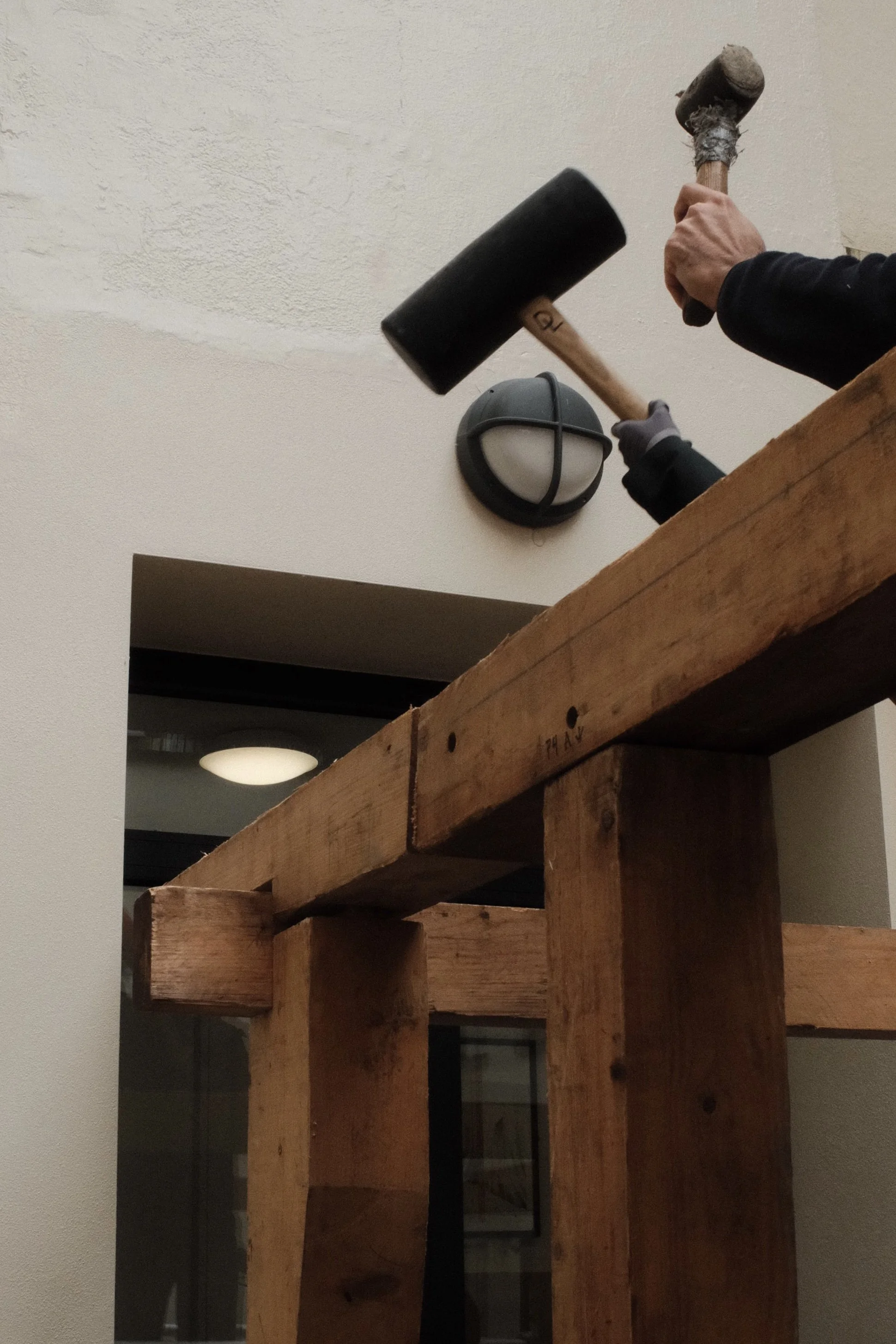
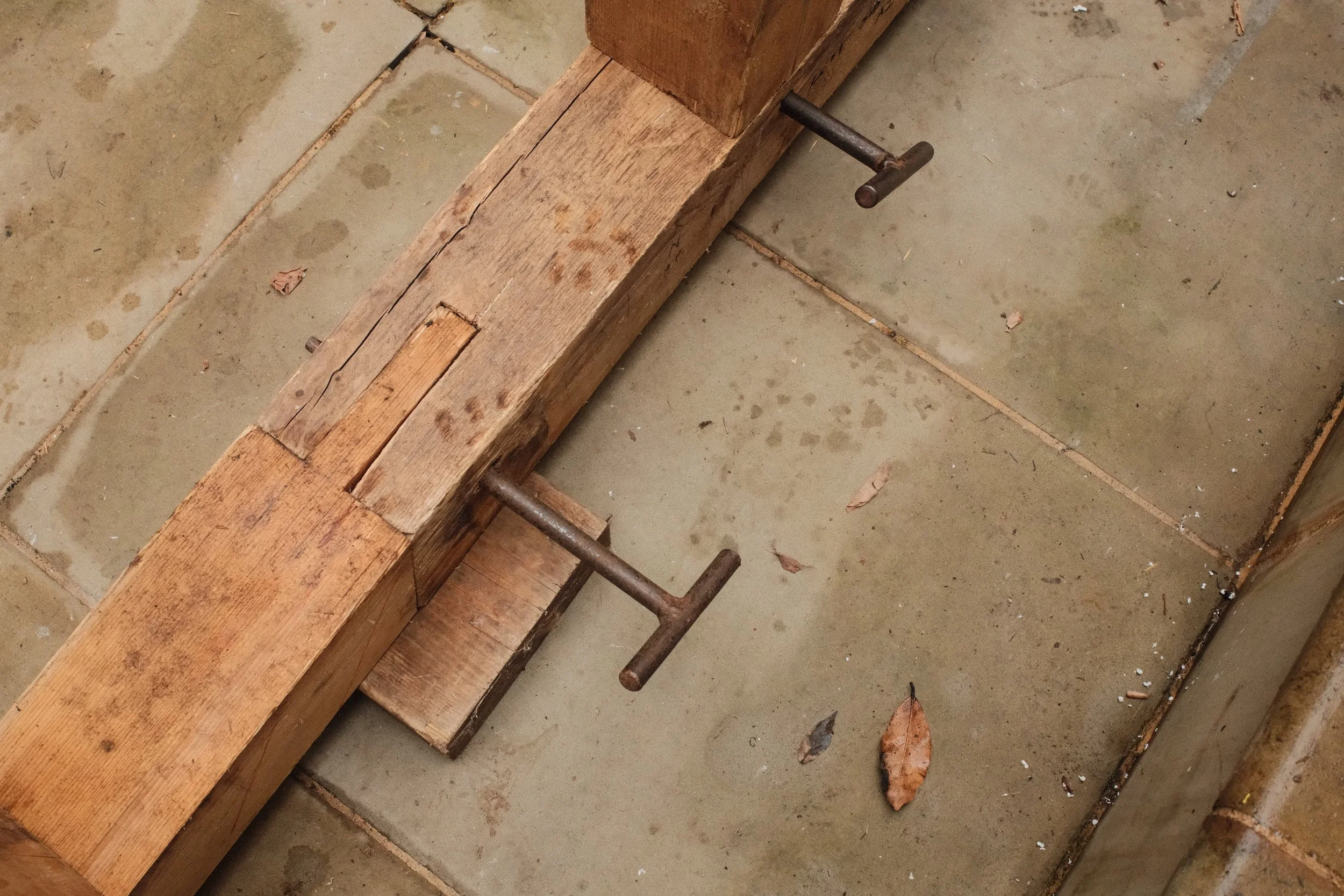
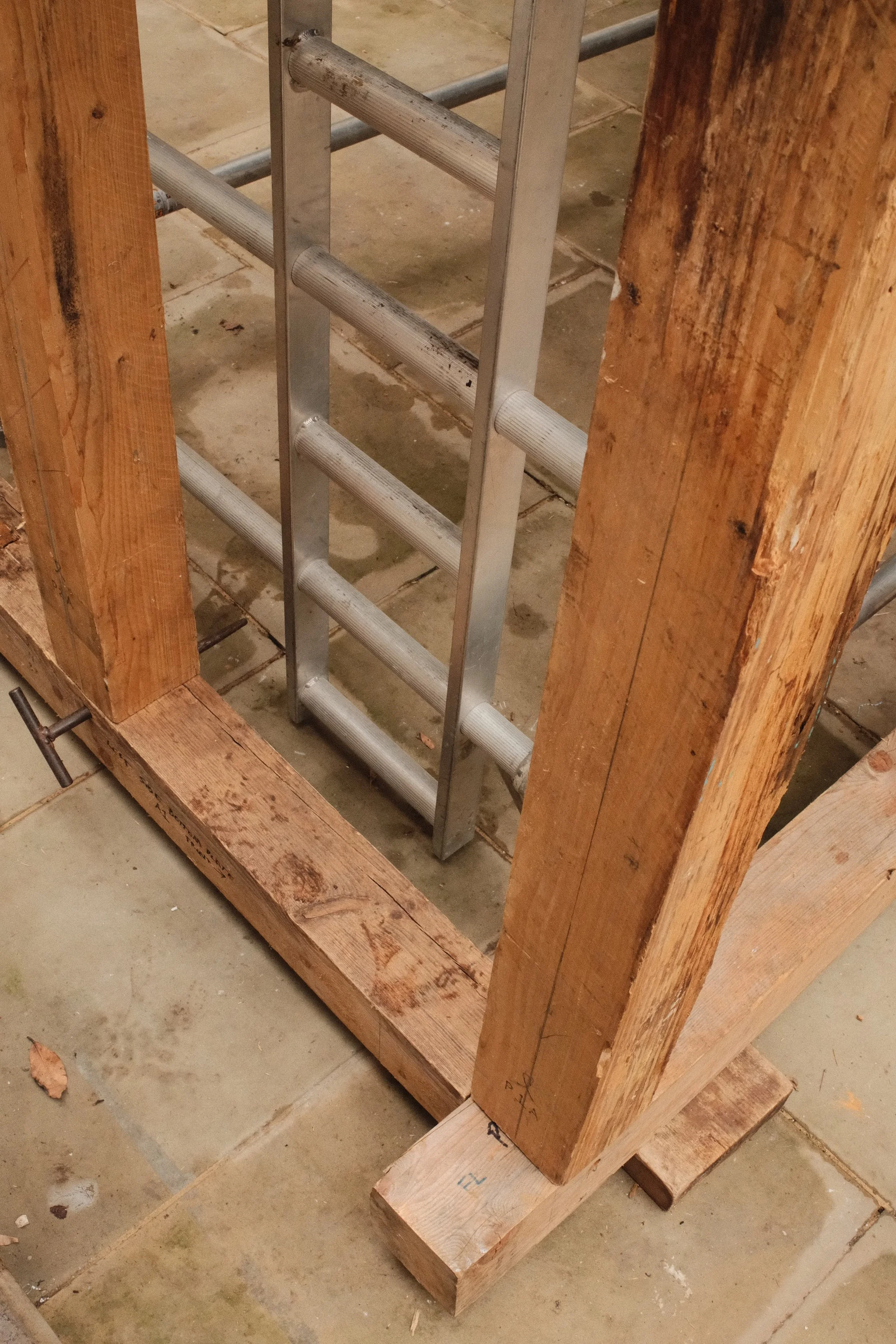
The frame is assembled using traditional carpentry techniques. Each timber element is joined through mortise-and-tenon connections, secured with hardwood pegs rather than metal fasteners. This joinery method allowed structures to be built with remarkable durability while remaining flexible enough to accommodate natural movement in the wood. The components are prefabricated and brought together as a flat-pack system, reflecting the historical practice of cutting and numbering timber elements before assembling them on site.
By reconstructing the frame at full scale, the installation operates as both a study model and a pedagogical tool. It demonstrates how early carpenters conceived buildings as modular structural systems and how geometry, joinery, and craftsmanship combine to create stability without modern mechanical fixings. The exposed structure invites viewers to read the building as a sequence of interconnected elements rather than a finished façade. In doing so, it highlights the intelligence of historic timber construction while making visible the spatial proportions and tectonic principles that underpin traditional English houses